
Water Pressure in French Holiday Homes | Tap-Stars
Water Pressure Problems in French Holiday Homes — What's Normal?
You turn on the tap after weeks away and the water either trickles out weakly or blasts out at full force — and you're left wondering which one is actually a problem. Water pressure is one of the most common sources of confusion for second-home owners in France, partly because "normal" here is genuinely different from what many owners are used to at home, and partly because a seasonal home makes it harder to tell a real fault from a one-off.
What Counts as Normal in France
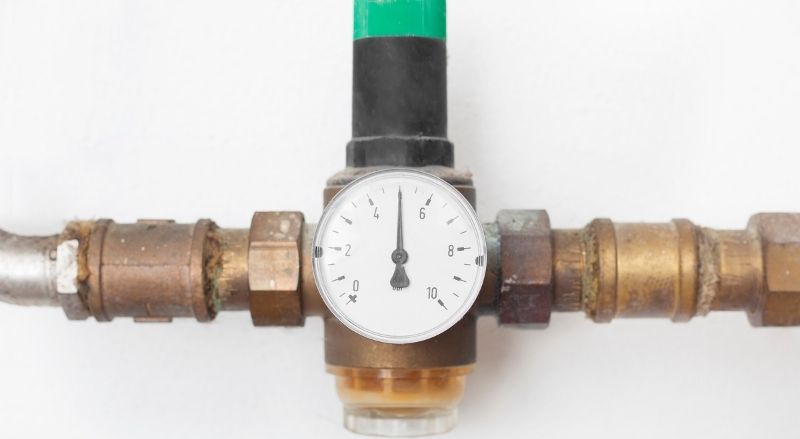
Incoming mains water pressure in France is often relatively high — 6 bar at the property boundary is considered normal, well above what plumbing fixtures and appliances are designed to handle directly. That's why a pressure-reducing valve, regulating incoming pressure down to around 3 bar, is standard practice at the point where water enters a French property.

If your home has this set up correctly, day-to-day pressure should feel strong and consistent — noticeably firm at the tap, without the banging, shuddering, or inconsistent flow that signals something's off. If it doesn't feel that way, the cause is usually one of a small number of things, most of which are straightforward to diagnose.
Signs of Low Pressure — and What Usually Causes It
Weak flow at one tap only is rarely a whole-system pressure issue — it's much more often a partially closed shut-off valve under that specific sink, a clogged aerator, or scale build-up restricting flow at that one fixture. Worth checking before assuming a bigger problem.
Weak flow throughout the house, especially right after you arrive after a long absence, is often related to valves that haven't been touched in months. A shut-off valve that's only partially reopened after winter, or one that's seized slightly from disuse, can restrict flow without it being obvious just by looking at it.
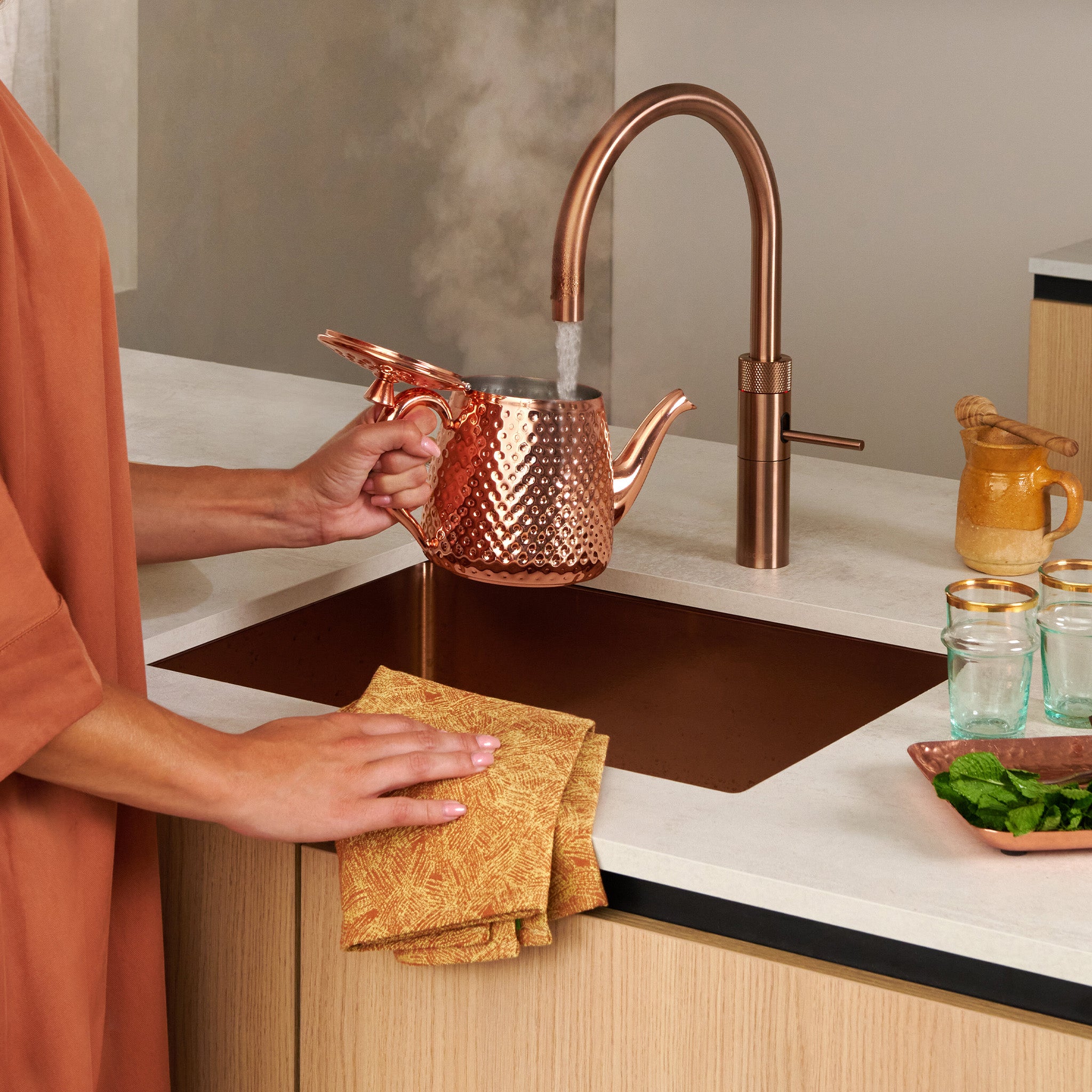
Gradually worsening pressure over several visits is a classic limescale signature — mineral build-up narrowing pipes and fixtures over time, particularly in hard-water regions like the Côte d'Azur. This tends to affect boiling-water taps and shower heads first, since they have the narrowest internal passages.
Pressure that's fine at first, then drops during use (for example, a tap that starts strong but tails off) often points to a supply-side issue — worth raising with your water provider (compteur/mains-side) rather than something inside the home.
Signs of High or Unregulated Pressure
If your pressure-reducing valve isn't installed, has failed, or wasn't set correctly, you may notice the opposite problem:
- Taps that feel unusually forceful, almost startling compared to what you're used to
- Banging or shuddering pipes when a tap or appliance shuts off suddenly (known as water hammer)
- Premature wear on tap washers, seals, and appliance valves — the kind of "it just broke for no reason" failure that's often actually a slow consequence of sustained high pressure
Unregulated high pressure is a quieter problem than low pressure — it doesn't announce itself the way a weak trickle does, which is exactly why it can go unnoticed in a seasonal home until something fails.
Why This Is Trickier in a Seasonal Home
In a home you use daily, pressure problems get noticed and diagnosed quickly, because you have a constant baseline to compare against. In a home you visit for a few weeks at a time, a few things make this harder:
- You don't have a reliable "normal" to compare to — is this visit's pressure actually different, or did you just forget what it usually feels like?
- Problems that develop slowly (like gradual limescale build-up) are easy to mistake for "this is just how it's always been"
- A pressure-reducing valve that fails while you're away goes unnoticed until your next visit — by which point any resulting damage has had time to develop
What to Check, and When to Call a Professional
A few checks you can reasonably do yourself:
- Confirm the main shut-off and any secondary valves are fully open, not partially closed
- Check whether the pressure issue is isolated to one tap (likely a local fixture issue) or affects the whole home (likely a supply or regulation issue)
- Look for visible limescale at tap spouts and shower heads as a first clue
It's worth calling in a professional when:
- Pressure has clearly changed since your last visit and you can't identify an obvious cause
- You hear banging or shuddering pipes, which can indicate unregulated high pressure worth addressing before it causes damage
- A boiling-water tap or other appliance seems to be struggling more than usual — this is often pressure- or scale-related, and catching it early is far cheaper than a full repair later
We Can Help
If pressure at your Côte d'Azur home doesn't feel right, or you're not sure whether your pressure-reducing valve is doing its job, [book a check-up] — this is a quick, common diagnosis for us, and one that's much easier to sort out at the first sign of trouble than after months of undetected strain on your system.
Part of our second-home care series: [Protecting Your Côte d'Azur Home's Plumbing While You're Away] · [Preparing Your Holiday Home's Water System for the Season].